We live in urgent times.
We are more connected than ever, but still do not see it.
For many students in school, school is a punishment.
They are forced to be there, and they don’t see the value of being there.
Right now we organize learning around consumption,
where an expert tells a novice what to learn and that novice consumes it.
There’s a big emphasis on the acquisition of knowledge.
We don’t live in a world where one person has the answers anymore.
We live in a world where the questions are so complicated
that you need to have collaboration among many people to learn.
You don’t just interact with the teacher who knows everything
and you have to soak up that information,
but you actually work with a group
students collaborating with each other,
students collaborating with the teacher,
and in the world that they are entering outside
there is a recognition that there is a new worldwide platform
that we are just beginning to sense its potential,
the internet, our relationships with others, the oneness of the world,
and the complex and interrelated nature of the problems that we are facing all around the world
It helps connect people globally
Digital learning represents a new kind of learning
which means that children are both critical consumers and producers of new information.
We think that students have really valuable knowledge to add to the world in terms of solutions
and the students own this knowledge by creating something with it.
Students become more engaged when they are asked to create the content
rather than passively accept it.
Meeting kids where they are,
by getting them to address the questions that they have, that matter to them,
really engaging them, in a way that they can feel a real impact in their life,
a genuine empowering impact,
so they own it both creatively and scientifically and they are sharing it, all the time.
It’s all about themselves becoming broader people, more knowledgeable, more capable,
We’re not just talking about how students learn in the classroom
but how they learn outside the classroom,
how they participate as citizens in the world,
how they interact with one another,
the way they form a sense of their own identity,
And there’s a bigger reason ….
they are helping other people
solve some of the world’s most pressing problems
improve the condition of humanity
We want to save the planet.
For us, it’s not so much about digital learning as it is about learning in general,
out in the real world
And the only way we can do this is if people participate.
Self-government itself depends on participation.
And it’s the only way that people are ever going to be able to get knowledge.
That is the way of the future, there’s no doubt about it.
And moving the discussion from education to learning more broadly,
means that it applies to all of us,
and all of us can bring our unique perspectives.
It is very easy to have a worldwide impact in today’s world,
so what will your impact on the world be?
via MrBurns's Blog and Digital Ethnography
Thanks!
August 16, 2009


August 04, 2009
Contrasts

Be soft.
Do not let the world make you hard.
Do not let the pain make you hate.
Do not let the bitterness steal your sweetness.
Take pride that even though the rest of the world may disagree,
you still believe it to be a beautiful place.
Do not let the world make you hard.
Do not let the pain make you hate.
Do not let the bitterness steal your sweetness.
Take pride that even though the rest of the world may disagree,
you still believe it to be a beautiful place.
When I read the news, there are all kinds of voices. The idealistic ones think about the grand opportunities a situation holds, the realistic ones emphasize the dangers and risks. The optimists choose topics that highlight the fun and hope in a situation, the pessimists turn angry or sarcastic over the daily problems of politics and power.
I myself deeply believe that we all should be realistic idealists and careful optimists :) This would make the world a better place. No one would be called a pollyanna again for limiting themselves to the positive aspects of a situation. And pessimists might cut their criticism to the part that is constructive. Balance is key as in most areas of life, I think.
Although it may seem incoherent, I will include this little wish of loving kindness below, because reading the news today I am just grateful to be alive and well here where I live. I wish everyone everywhere was!
May all beings be happy.
May all beings be safe.
May all beings be healthy.
May all beings be peaceful.
May all beings be safe.
May all beings be healthy.
May all beings be peaceful.
Picture taken by Tyler Knott Gregson, a gifted photographer with a nice blog.
"Be soft" was taken from quote book.
The last verses are taken from a guided Metta-Meditation by zen teacher Gil Fronsdal.
July 28, 2009
Of course I'm a vegetarian!
From time to time people ask me why I am vegetarian. Obviously every vegetarian knows this question and I found myself thinking some time ago that actually the question should be answered by another question: Why do you eat meat?
Most carnivores of course hardly ever thought about their decision in detail because nobody seriously asks them. It's just the normal state of being. It's enough reason to just like meat. Vegetarians on the other hand need to mull over their decision and their reasons will be questioned. Yet maybe meat-eaters should be considering this topic just like they consider not drinking as much pop because they are worried about their figure.
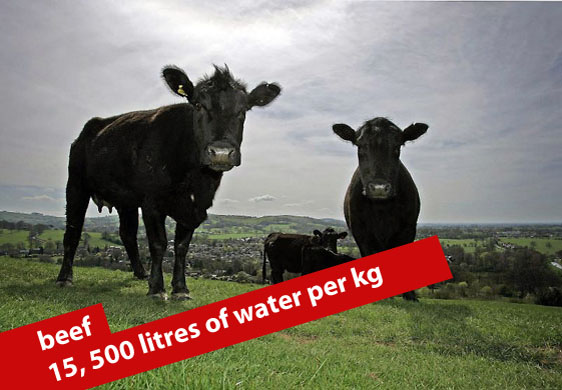 Having said that I will give you my major reason for being a vegetarian. It is more important to me than the concern about ethical treatment of animals and I actually like the taste of meat quite a bit. It is an ecological reason.
When you think about the food chain you find that to produce a certain amount of meat you need to feed the animal with cereals that could also be used for the starving millions in the world. This wheat or soy is produced on huge acres in places where there was rainforest until some years ago which was keeping our climate oxygenized. On the other hand, huge food plants with tens of thousands of cattle emit massive amounts of methane, a very strong greenhouse gas (18% of greenhouse gases attributed to livestock production!).
If you follow the steps further back that lead to this mountain of cereal you have water, and vast amounts of it. Water is the most important resource of the planet and arguably the wars of the 21st century will be about access to clean sources of it. As if that wasn't enough, livestock production takes place in remote Argentina which means that the average meat consumers in Europe and the North America have their steak shipped halfway around the globe. Here is a map of meat consumption from here.
Well, my point is made :) I hope you were open for all this today and will think more consciously about food. If you want data and entertaining talk about how to better eat, just watch this TED video. And if you still would like to know more, watch the founder of treehugger.com, why you should and how you could be a weekday vegetarian (starting minute 9).
Btw: I don't smoke either, but that's a whole different story ;)
Most carnivores of course hardly ever thought about their decision in detail because nobody seriously asks them. It's just the normal state of being. It's enough reason to just like meat. Vegetarians on the other hand need to mull over their decision and their reasons will be questioned. Yet maybe meat-eaters should be considering this topic just like they consider not drinking as much pop because they are worried about their figure.
Having said that I will give you my major reason for being a vegetarian. It is more important to me than the concern about ethical treatment of animals and I actually like the taste of meat quite a bit. It is an ecological reason. When you think about the food chain you find that to produce a certain amount of meat you need to feed the animal with cereals that could also be used for the starving millions in the world. This wheat or soy is produced on huge acres in places where there was rainforest until some years ago which was keeping our climate oxygenized. On the other hand, huge food plants with tens of thousands of cattle emit massive amounts of methane, a very strong greenhouse gas (18% of greenhouse gases attributed to livestock production!).
If you follow the steps further back that lead to this mountain of cereal you have water, and vast amounts of it. Water is the most important resource of the planet and arguably the wars of the 21st century will be about access to clean sources of it. As if that wasn't enough, livestock production takes place in remote Argentina which means that the average meat consumers in Europe and the North America have their steak shipped halfway around the globe. Here is a map of meat consumption from here.
Well, my point is made :) I hope you were open for all this today and will think more consciously about food. If you want data and entertaining talk about how to better eat, just watch this TED video. And if you still would like to know more, watch the founder of treehugger.com, why you should and how you could be a weekday vegetarian (starting minute 9).
Btw: I don't smoke either, but that's a whole different story ;)
July 07, 2009
Peace - A poem

Do you think peace requires an end to war
Or tigers eating only vegetables?
Does peace require an absence from your boss, your spouse, yourself?
Do you think peace will come some other place than here?
Some other time than now?
In some other heart than yours?
Peace is this moment without judgement. That is all.
This moment in the heart-space where everything that is, is welcome.
Peace is this moment without thinking that it should be some other way.
That you should feel some other thing.
That your life should unfold according to your plans.
Peace is this moment without judgement.
This moment in the heart-space where everything that is, is welcome.
Namaste
(by Dorothy Hunt)
July 01, 2009
Represent love

"Aren't we privileged to live in a time when everything is at stake, and when our efforts make a difference in the eternal contest between the forces of light and shadow, between togetherness and division, between justice and exploitation? Oh, be joyful that you are a warrior in this great time!
"Will we rise to this battle? If so, we cannot lose, for rising up to it is our victory . . . If we represent love in the world, you see, we have already won."
- Doris "Granny D" Haddock from her 93rd birthday speech
Subscribe to:
Posts (Atom)


